
Which Solar System Is Right for Your Home in Maharashtra? On-Grid vs Off-Grid vs Hybrid (2026)

As electricity prices continue to rise across Maharashtra, more homeowners are investing in rooftop solar systems to reduce monthly power bills and gain energy independence. However, one of the biggest questions homeowners face is:
Which solar system is best for my home—On-Grid, Off-Grid, or Hybrid?
Each system has its own advantages, costs, and ideal use cases. Choosing the right one depends on your electricity consumption, location, budget, and whether you experience frequent power cuts.
In this guide, we’ll compare all three solar system types to help you make the right decision for your home in Maharashtra.
Why More Maharashtra Homes Are Switching to Solar in 2026
Maharashtra is one of India’s leading states for solar energy adoption due to:
- 300+ sunny days every year
- Rising electricity tariffs
- Government support for rooftop solar
- Net metering benefits
- Lower installation costs compared to previous years
- Increasing demand for sustainable energy
Whether you live in Mumbai, Pune, Nashik, Nagpur, Aurangabad, Kolhapur, Thane, or a rural town, solar power can significantly reduce your electricity expenses.
What Is an On-Grid Solar System?


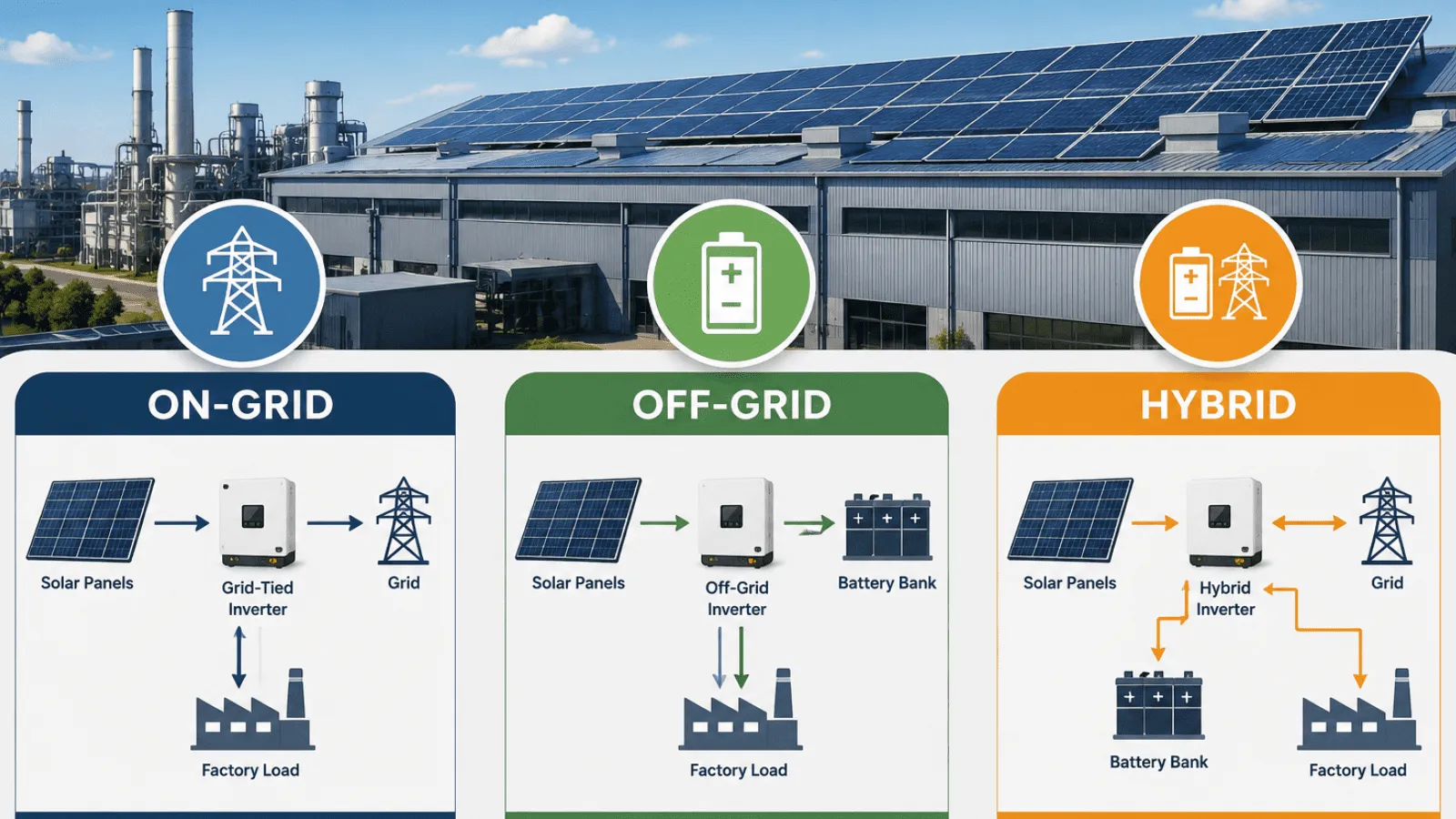
An On-Grid Solar System is connected directly to the electricity grid.
During the day:
- Solar panels generate electricity.
- Your home uses solar power first.
- Extra electricity is exported to the grid.
- At night, electricity is imported from the grid.
This system works through Net Metering, allowing you to receive credits for excess electricity generated.
Best For
- Urban homes
- Apartments
- Independent houses
- Areas with reliable electricity supply
Advantages
- Lowest installation cost
- Maximum electricity bill savings
- No battery maintenance
- High return on investment
- Government subsidy available (subject to eligibility)
Limitations
- Doesn’t provide backup during power cuts.
- Shuts down automatically during grid outages for safety.
What Is an Off-Grid Solar System?

An Off-Grid Solar System operates independently without relying on the electricity grid.
It includes:
- Solar panels
- Solar inverter
- Battery bank
- Charge controller
Electricity generated during the day charges the batteries, which supply power at night or during cloudy weather.
Best For
- Remote villages
- Farmhouses
- Agricultural land
- Areas without reliable electricity
Advantages
- Complete energy independence
- Power available even during outages
- Suitable where grid electricity isn’t available
Limitations
- Higher installation cost
- Battery replacement every few years
- More maintenance compared to on-grid systems
What Is a Hybrid Solar System?

A Hybrid Solar System combines the features of both on-grid and off-grid systems.
It connects to:
- Solar panels
- Battery storage
- Electricity grid
The system prioritizes solar energy, stores excess power in batteries, and uses the grid only when necessary.
Best For
- Homes with frequent power cuts
- Premium residential properties
- Businesses needing uninterrupted electricity
- Families wanting both savings and backup power
Advantages
- Electricity bill savings
- Battery backup
- Better energy security
- Smart energy management
Limitations
- Higher upfront investment
- Battery maintenance required
On-Grid vs Off-Grid vs Hybrid Solar Systems
| Feature | On-Grid | Off-Grid | Hybrid |
|---|---|---|---|
| Grid Connection | Yes | No | Yes |
| Battery Required | No | Yes | Yes |
| Backup During Power Cut | No | Yes | Yes |
| Net Metering | Yes | No | Yes (where supported) |
| Installation Cost | Lowest | Highest | Medium to High |
| Maintenance | Low | Medium | Medium |
| Electricity Bill Savings | Excellent | Moderate | Excellent |
| Best For | Cities | Remote Areas | Homes with Power Cuts |
Which Solar System Is Best for Maharashtra?
The ideal choice depends on where you live and your electricity needs.
Choose On-Grid Solar If:
- You receive regular electricity.
- Your goal is reducing monthly electricity bills.
- You want the fastest return on investment.
- You don’t need power backup.
This is the most popular choice for homeowners in Mumbai, Pune, Thane, Nashik, and Nagpur.
Choose Off-Grid Solar If:
- Your property is in a remote location.
- Grid electricity is unavailable.
- You need complete energy independence.
- You own a farmhouse or agricultural property.
Choose Hybrid Solar If:
- Your area experiences frequent power cuts.
- You want uninterrupted electricity.
- You work from home.
- You have essential appliances that require continuous power.
Cost Comparison in Maharashtra (2026)
| Solar System | Approximate Cost |
|---|---|
| 3 kW On-Grid | ₹1.7–2.4 Lakhs |
| 5 kW On-Grid | ₹2.8–3.8 Lakhs |
| 3 kW Hybrid | ₹3.5–5 Lakhs |
| 5 kW Hybrid | ₹5–7 Lakhs |
| Off-Grid Systems | Varies based on battery capacity |
Prices may vary depending on equipment quality, installation requirements, and available government subsidies.
Government Subsidy for Rooftop Solar
Homeowners in Maharashtra may be eligible for central government rooftop solar subsidies for residential installations under applicable schemes.
Benefits may include:
- Lower installation cost
- Faster return on investment
- Reduced electricity bills
- Increased property value
Always verify the latest subsidy guidelines and eligibility before installation.
How to Choose the Right Solar System
Consider the following questions before making your decision:
1. Do you experience frequent power cuts?
If yes, a Hybrid Solar System is usually the better option.
2. Is your area connected to the electricity grid?
If yes, an On-Grid Solar System generally provides the best value.
3. Do you need battery backup?
If backup power is essential, choose either a Hybrid or Off-Grid system.
4. What is your budget?
- Limited budget → On-Grid
- Medium budget → Hybrid
- No grid access → Off-Grid
5. What are your electricity bills?
Homes with monthly electricity bills above ₹2,500–₹3,000 often see greater savings from rooftop solar.
Which System Offers the Best Return on Investment?
For most homeowners in Maharashtra:
Winner: On-Grid Solar System
Reasons:
- Lowest installation cost
- Maximum electricity savings
- Minimal maintenance
- Government subsidy support
- Faster payback period (typically 4–6 years, depending on usage and incentives)
Hybrid systems provide added resilience during outages but involve a higher initial investment due to battery storage.
Frequently Asked Questions
Which solar system is best for homes in Maharashtra?
For most urban homes with reliable electricity, an On-Grid Solar System is the most cost-effective option.
Which system works during power cuts?
Both Hybrid and Off-Grid Solar Systems can supply electricity during grid outages, provided the batteries have sufficient charge.
Is hybrid solar worth the extra cost?
If your area experiences regular power cuts or you require uninterrupted electricity for work or essential appliances, a hybrid system can be a worthwhile investment.
Can I upgrade from on-grid to hybrid later?
In many cases, yes. However, compatibility depends on your existing inverter and system design. Planning for future expansion during installation can make upgrades easier.
Which solar system requires the least maintenance?
On-grid solar systems generally require the least maintenance because they do not use batteries.
Final Thoughts
Selecting the right solar system is one of the most important decisions you’ll make when investing in rooftop solar.
- Choose On-Grid if your priority is maximum savings and your area has a reliable electricity supply.
- Choose Off-Grid if your property has little or no access to the electricity grid.
- Choose Hybrid if you want both electricity bill savings and dependable backup during power cuts.
With Maharashtra’s abundant sunshine, growing government support, and increasing electricity costs, 2026 is an excellent time to invest in rooftop solar. By evaluating your energy usage, budget, and backup needs, you can choose a system that delivers reliable, clean, and cost-effective power for years to come.